
How We Got Here Genealogy
On YouTube
On our channel we share Family Story's as well as How To Videos to help you in your Family History Journey
Merch Store
Check out our Store for fun family history related products as well as a collection of Family History Tools and Resources.
PodCast
Check Out our Monthly Podcast where we share fascinating Stories of people who lived in Atlantic Canada
Courses
We are in the process of developing courses to help you be able to dig deeper into your Family's Story

Let Us Help You Discover Research Share Your Family's Story

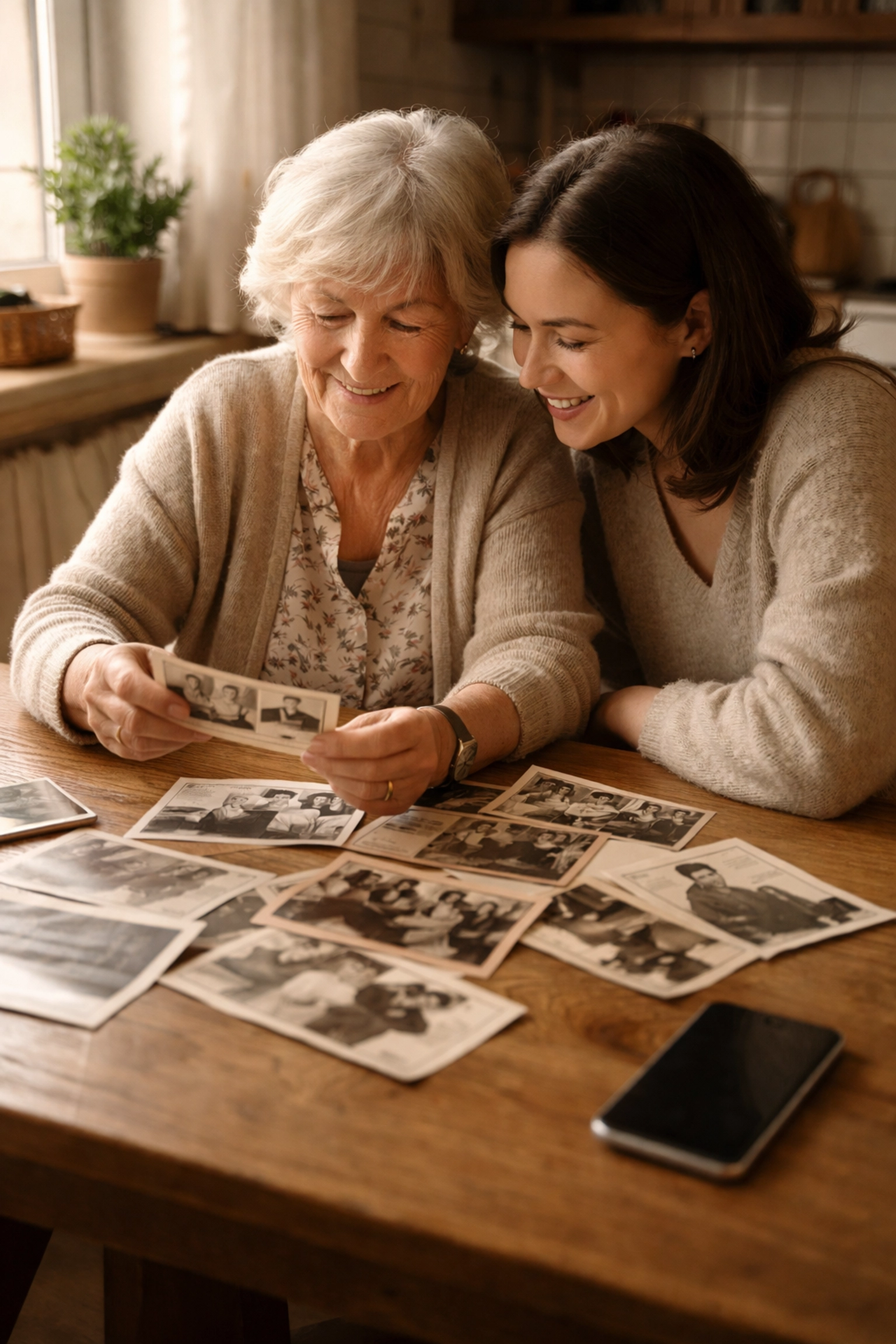
Family Historian Brian Nash believes every family has a unique story and place in History that needs to be told.
Whether you are just getting started on researching your family or have been working on it for years, Brian can help you make that next step to help your family tree come to life by offering the following services;

  • A Library of Informational and How to Videos
  • Customized Courses to get you started Right
  • An Online Community of Family Historians
  • Tools and Resources for Organizing Your Family History
  • One on One Coaching and Mentorship
  • Research Planning and Assistance
To Help You Get Started on the Right Path

Get A Free Consultation
Our Genealogy Services

The Help You Need to Start Grow Share Your Family Tree

Whether you are needing help getting started on your family tree, need help breaking down a brick wall, or want us to do all the work for you. We have a service to help you to better understand your family's story and their place in History.

Get Organized
Get Organized
Whether it's getting started on your family history, or you are getting back at it. We can help you organize the information you have, and develop goals and create a unique plan to help you achieve them.
Research & Discovery
Your family story is only as good as the research that has gone into it. Some of our research services include: consultation to help you know where to get started and what to look for; assitance breaking down brick-walls; and full family tree audits to confirm research and sources. No matter your need we can develop a custom solution right for you and for your budget.
Sharing Your Story
Sharing Your Story
With all the hard work that goes into developing your family history, it is important you are able to present it to your friends and family. From the simple family tree poster to producing a full-fledge video documentary on your family and everything in between we have you covered to make sure you have an attractive and professional style presentation of your family history. Through our network of suppliers and experts in various products and services, we'll make sure it not only gets done, but gets done right!
Why Choose Us

What makes us Different Different

At How We Got Here Our Goal is to help people learn and appreciate history by making it personal through helping you to learn the People, Places and Events that make up your family's story.

Knowledge ...
The team at How We Got Here are not just Genealogists but Historians with a deep understanding of History and Culture specializing in those events that spurred migration and emigration. We also have access to experts in Genetic Genealogy to help you understand those clues to your past hidden in your DNA.
Collabrative Approach
We don't just work for you, we work with you. While we'd be happy to do all the work for you, we know that can be cost pohibitive. Plus part of the joy that comes from doing a family tree is the detective work to discover the pieces and put them together.
Caring
We know what a precious gift a family history is and we care about making sure you are able to create and share a complete as possible family history. We care about your family's history and getting it right as much as you care about your family
We Know It's About You
We tailor our services uniquely to you. Meeting you where you are at in terms of skills, desired results and budget. We truly believe your success is what makes us successful.
Read and Listen

Recent Podcasts & Blog Posts Blog Posts Blog Post

Check out our recent Podcasts and Blog Posts

7 Mistakes You're Making with Your Scottish Ancestry Research (and How to Fix Them)

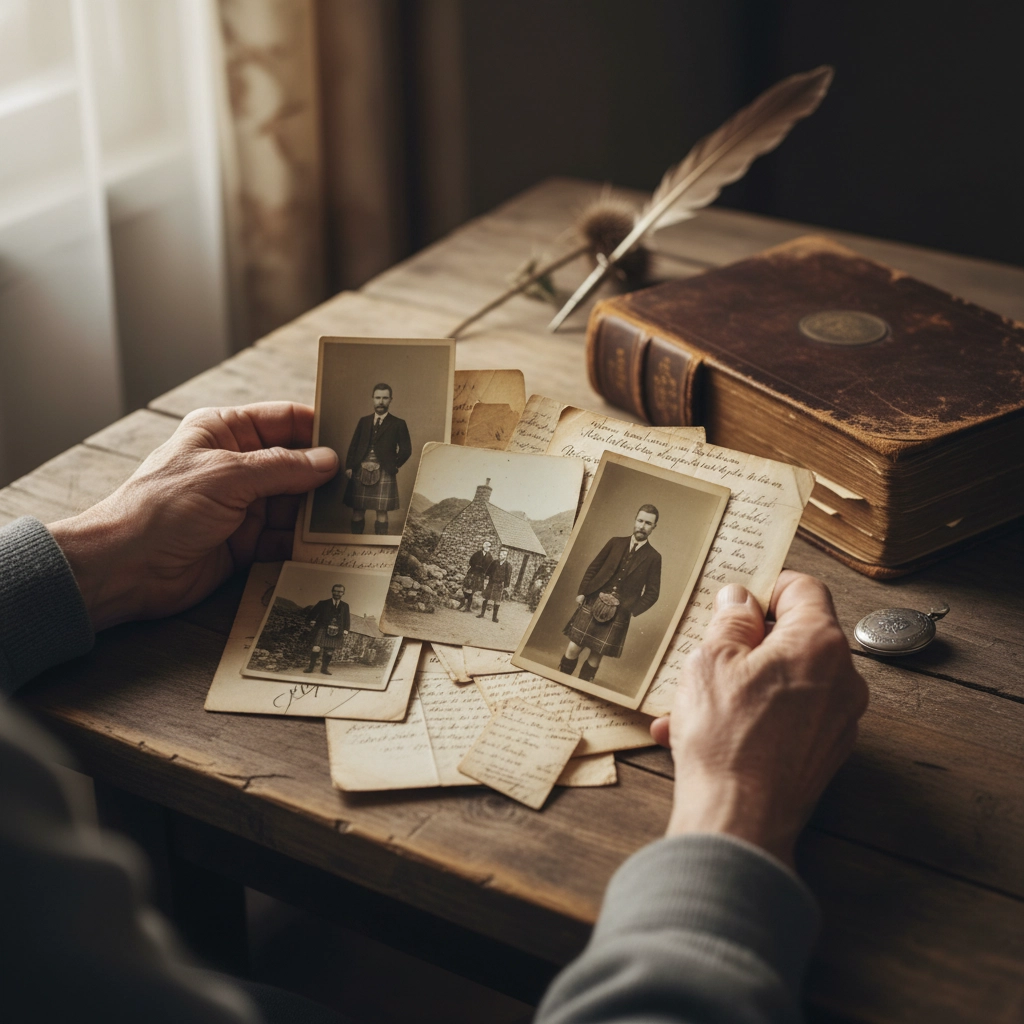
Tracing your Scottish roots can feel like wandering through a Highland mist: you know there's something magnificent ahead, but the path isn't always clear. Whether you're just beginning your journey into Scottish genealogy or you've been researching for years, chances are you've stumbled into at least one of these common pitfalls that can send your family tree veering off course.

Don't worry: every genealogist has been there! The key is recognising these mistakes early and knowing how to course-correct. Let's dive into the seven most common Scottish ancestry research blunders and, more importantly, how to fix them so you can uncover the rich stories of your Highland (or Lowland) heritage.

Mistake #1: Falling into the Name Spelling Trap

Here's the thing about our Scottish ancestors: they weren't particularly fussed about consistent spelling. In fact, standardised spelling is a relatively modern concept that would have seemed rather peculiar to your great-great-grandmother from Invergordon.

Your MacDonald ancestor might appear as McDonald in one record, MacDonnell in another, and McKonald in a third. Census takers, parish clerks, and ship captains all had their own interpretations of how Scottish names should be recorded. It's like a centuries-old game of Chinese whispers, except the consequences affect your entire family tree.

The Fix: Cast a wider net with your searches. Don't just search for "MacLeod": try "McLeod," "MacCloud," "McCloud," and even "MacClowd." Use wildcard searches (like "Macod" or "Mcod") on genealogy websites to capture variations you might not have considered. Keep a running list of all the spelling variations you discover for each surname in your tree: you'll be amazed at how creative the variations can be!

image_1

Mistake #2: Getting Lost in the Sea of Scottish Johns

Scotland has a particular fondness for certain names, and this can turn your research into a genealogical nightmare. James, John, William, Robert, Margaret, Mary, and Jean were incredibly popular choices, meaning you might find dozens of people with the same name in the same parish during the same time period.

Imagine trying to find the right John Stewart in 19th-century Glasgow: it's like looking for a specific grain of sand on a beach. Without additional identifying information, you could easily attach the wrong John to your family tree, creating a domino effect of incorrect connections.

The Fix: Think of yourself as a detective building a case. Don't rely solely on names and dates: look for distinguishing details like occupations, middle names, spouse's names, and children's names. Use the FAN principle (Friends, Associates, and Neighbours) to build context around your ancestors. Often, Scottish families lived near relatives or migrated together, so researching the broader community can help you identify the correct individual among all those Johns and Jameses.

Mistake #3: Treating Family Stories as Gospel Truth

Every family has them: those captivating stories passed down through generations about the castle your ancestors owned or the clan chief in your lineage. These tales often contain kernels of truth wrapped in layers of embellishment, wishful thinking, and simple misremembering.

Family oral history is like a centuries-old game of telephone. Each retelling adds a bit of colour, removes inconvenient details, or conflates multiple people into one dramatic narrative. That "castle" might have been a modest cottage, and your "clan chief" ancestor could have been a distant relation to someone who knew someone who once worked for the actual chief.

The Fix: Approach family stories as valuable clues rather than established facts. Use them as starting points for research, not endpoints. If family lore says your ancestor came from a particular Scottish village, investigate that area: but be prepared to discover the reality might be quite different from the legend. Document what you can prove through records, and clearly distinguish between verified facts and family traditions in your research notes.

image_2

Mistake #4: Copying and Pasting from Online Family Trees

Online family trees can seem like genealogical treasure troves, offering seemingly complete lineages that would take you years to research independently. But here's the catch: many of these trees are built on shaky foundations, with researchers copying information from other trees without verification.

It's the genealogical equivalent of a house of cards. If the original researcher made an error connecting two generations, every person attached to that lineage becomes suspect. You might unknowingly add hundreds of unrelated people to your family tree, creating an impressive but entirely fictional Scottish heritage.

The Fix: Treat online family trees as research hints, not definitive sources. Before adding anyone to your tree based on someone else's research, verify the connection through original records. Look for birth certificates, death certificates, census records, and parish registers that support the claimed relationships. It takes more time, but you'll build a family tree based on solid evidence rather than wishful thinking.

Mistake #5: Ignoring the Paper Trail

Picture this: you've spent hours researching and finally discover a crucial piece of information about your Scottish ancestor. Six months later, you want to verify that detail or show it to a cousin, but you can't remember where you found it. Without proper source documentation, your research becomes a genealogical ghost story: interesting but impossible to substantiate.

This mistake is particularly costly in Scottish research, where records can be scattered across multiple repositories and online databases. That parish register entry you found last year might be difficult to locate again without proper citation.

The Fix: Develop a source citation habit from day one. For every piece of information you add to your family tree, record exactly where you found it: the specific website, database, document name, page number, and date you accessed it. Use genealogy software that makes citation easy, or create a simple system in a notebook. Future you (and your family members) will thank you for this diligence.

image_3

Mistake #6: Limiting Yourself to the Usual Suspects

Many genealogists build their entire Scottish family history using only census records and vital statistics (births, marriages, deaths). While these sources provide excellent skeletal information, they're like reading only the chapter headings of your ancestors' life stories: you miss all the fascinating details that make them real people.

Scottish ancestors led rich, complex lives that extended far beyond the basic facts captured in census returns. They served in the military, emigrated to new countries, joined churches, owned property, wrote wills, appeared in newspapers, and left traces in dozens of other record types that can flesh out their stories.

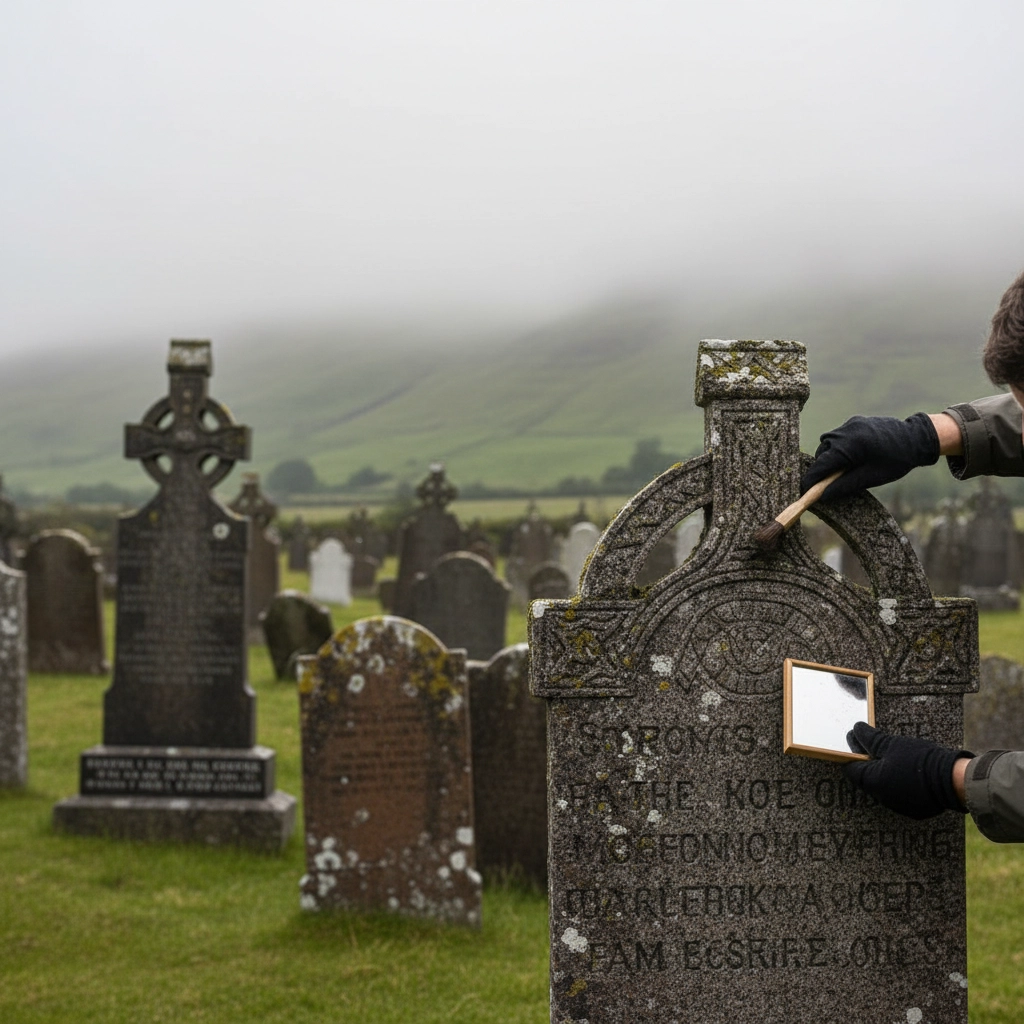
The Fix: Expand your research toolkit to include kirk session records, military service records, passenger lists, newspaper archives, probate records, land records, tax rolls, and cemetery records. Each record type reveals different aspects of your ancestors' lives and can provide breakthrough discoveries. Don't just document that your ancestor lived: discover how they lived.

Mistake #7: Underestimating Scottish-Specific Research Challenges

Scottish genealogy presents unique obstacles that can derail researchers who aren't prepared for them. Parish registers might have gaps due to wars, religious conflicts, or simple neglect. Non-conformist ancestors might not appear in Church of Scotland records at all. Place names can be frustratingly vague: "Scotland" as a birthplace isn't particularly helpful when you're trying to narrow down research locations.

Additionally, Scottish naming patterns, illegitimacy records, and clan relationships create layers of complexity that don't exist in other genealogical traditions. Many researchers get discouraged when they encounter these challenges without understanding they're normal parts of Scottish research.

The Fix: Educate yourself about Scottish history, geography, and record-keeping practices. Join Scottish genealogy groups and forums where experienced researchers share knowledge and strategies. Learn about Scottish naming patterns: many families followed traditions like naming the first son after the paternal grandfather and the first daughter after the maternal grandmother. Understanding these patterns can help you predict relationships and identify missing records.

When you encounter vague location information, research your ancestor's siblings and extended family: later records might provide more specific birthplace details. Use gazetteer resources to understand Scottish geography and identify small villages that might not appear on modern maps.

Moving Forward with Confidence

Remember, encountering these challenges doesn't make you a poor researcher: it makes you a normal one! Every genealogist working with Scottish ancestry faces these same obstacles. The difference between those who succeed and those who get frustrated lies in recognising these common pitfalls and developing strategies to overcome them.

Your Scottish ancestors lived remarkable lives filled with courage, hardship, joy, and perseverance. They deserve to have their stories told accurately and completely. By avoiding these seven common mistakes, you're not just improving your research skills: you're honouring their memory and preserving their legacy for future generations.

Scottish genealogy is a journey, not a sprint. Each record you discover, each connection you verify, and each story you uncover brings you closer to understanding not just where you came from, but who your ancestors really were. And that understanding: that deep connection to your Scottish heritage: makes every challenging research moment worth the effort.

Ready to dive deeper into your Scottish ancestry research? Visit How We Got Here Genealogy Services to discover how professional guidance can help you navigate the unique challenges of Scottish genealogy and uncover the remarkable stories waiting in your family tree.

Scottish Family History Research
7 Mistakes You're Making with Your Scottish Ancestry Research (and How to Fix Them)

Tracing your Scottish roots can feel like wandering through a Highland mist: you know there's something magnificent ahead, but the path isn't always clear. Whether you're just beginning your journey into Scottish genealogy or you've been researching for years, chances are you've stumbled into at least one of these common pitfalls that can send your family tree veering off course.

Don't worry: every genealogist has been there! The key is recognising these mistakes early and knowing how to course-correct. Let's dive into the seven most common Scottish ancestry research blunders and, more importantly, how to fix them so you can uncover the rich stories of your Highland (or Lowland) heritage.

Mistake #1: Falling into the Name Spelling Trap

Here's the thing about our Scottish ancestors: they weren't particularly fussed about consistent spelling. In fact, standardised spelling is a relatively modern concept that would have seemed rather peculiar to your great-great-grandmother from Invergordon.

Your MacDonald ancestor might appear as McDonald in one record, MacDonnell in another, and McKonald in a third. Census takers, parish clerks, and ship captains all had their own interpretations of how Scottish names should be recorded. It's like a centuries-old game of Chinese whispers, except the consequences affect your entire family tree.

The Fix: Cast a wider net with your searches. Don't just search for "MacLeod": try "McLeod," "MacCloud," "McCloud," and even "MacClowd." Use wildcard searches (like "Macod" or "Mcod") on genealogy websites to capture variations you might not have considered. Keep a running list of all the spelling variations you discover for each surname in your tree: you'll be amazed at how creative the variations can be!

image_1

Mistake #2: Getting Lost in the Sea of Scottish Johns

Scotland has a particular fondness for certain names, and this can turn your research into a genealogical nightmare. James, John, William, Robert, Margaret, Mary, and Jean were incredibly popular choices, meaning you might find dozens of people with the same name in the same parish during the same time period.

Imagine trying to find the right John Stewart in 19th-century Glasgow: it's like looking for a specific grain of sand on a beach. Without additional identifying information, you could easily attach the wrong John to your family tree, creating a domino effect of incorrect connections.

The Fix: Think of yourself as a detective building a case. Don't rely solely on names and dates: look for distinguishing details like occupations, middle names, spouse's names, and children's names. Use the FAN principle (Friends, Associates, and Neighbours) to build context around your ancestors. Often, Scottish families lived near relatives or migrated together, so researching the broader community can help you identify the correct individual among all those Johns and Jameses.

Mistake #3: Treating Family Stories as Gospel Truth

Every family has them: those captivating stories passed down through generations about the castle your ancestors owned or the clan chief in your lineage. These tales often contain kernels of truth wrapped in layers of embellishment, wishful thinking, and simple misremembering.

Family oral history is like a centuries-old game of telephone. Each retelling adds a bit of colour, removes inconvenient details, or conflates multiple people into one dramatic narrative. That "castle" might have been a modest cottage, and your "clan chief" ancestor could have been a distant relation to someone who knew someone who once worked for the actual chief.

The Fix: Approach family stories as valuable clues rather than established facts. Use them as starting points for research, not endpoints. If family lore says your ancestor came from a particular Scottish village, investigate that area: but be prepared to discover the reality might be quite different from the legend. Document what you can prove through records, and clearly distinguish between verified facts and family traditions in your research notes.

image_2

Mistake #4: Copying and Pasting from Online Family Trees

Online family trees can seem like genealogical treasure troves, offering seemingly complete lineages that would take you years to research independently. But here's the catch: many of these trees are built on shaky foundations, with researchers copying information from other trees without verification.

It's the genealogical equivalent of a house of cards. If the original researcher made an error connecting two generations, every person attached to that lineage becomes suspect. You might unknowingly add hundreds of unrelated people to your family tree, creating an impressive but entirely fictional Scottish heritage.

The Fix: Treat online family trees as research hints, not definitive sources. Before adding anyone to your tree based on someone else's research, verify the connection through original records. Look for birth certificates, death certificates, census records, and parish registers that support the claimed relationships. It takes more time, but you'll build a family tree based on solid evidence rather than wishful thinking.

Mistake #5: Ignoring the Paper Trail

Picture this: you've spent hours researching and finally discover a crucial piece of information about your Scottish ancestor. Six months later, you want to verify that detail or show it to a cousin, but you can't remember where you found it. Without proper source documentation, your research becomes a genealogical ghost story: interesting but impossible to substantiate.

This mistake is particularly costly in Scottish research, where records can be scattered across multiple repositories and online databases. That parish register entry you found last year might be difficult to locate again without proper citation.

The Fix: Develop a source citation habit from day one. For every piece of information you add to your family tree, record exactly where you found it: the specific website, database, document name, page number, and date you accessed it. Use genealogy software that makes citation easy, or create a simple system in a notebook. Future you (and your family members) will thank you for this diligence.

image_3

Mistake #6: Limiting Yourself to the Usual Suspects

Many genealogists build their entire Scottish family history using only census records and vital statistics (births, marriages, deaths). While these sources provide excellent skeletal information, they're like reading only the chapter headings of your ancestors' life stories: you miss all the fascinating details that make them real people.

Scottish ancestors led rich, complex lives that extended far beyond the basic facts captured in census returns. They served in the military, emigrated to new countries, joined churches, owned property, wrote wills, appeared in newspapers, and left traces in dozens of other record types that can flesh out their stories.

The Fix: Expand your research toolkit to include kirk session records, military service records, passenger lists, newspaper archives, probate records, land records, tax rolls, and cemetery records. Each record type reveals different aspects of your ancestors' lives and can provide breakthrough discoveries. Don't just document that your ancestor lived: discover how they lived.

Mistake #7: Underestimating Scottish-Specific Research Challenges

Scottish genealogy presents unique obstacles that can derail researchers who aren't prepared for them. Parish registers might have gaps due to wars, religious conflicts, or simple neglect. Non-conformist ancestors might not appear in Church of Scotland records at all. Place names can be frustratingly vague: "Scotland" as a birthplace isn't particularly helpful when you're trying to narrow down research locations.

Additionally, Scottish naming patterns, illegitimacy records, and clan relationships create layers of complexity that don't exist in other genealogical traditions. Many researchers get discouraged when they encounter these challenges without understanding they're normal parts of Scottish research.

The Fix: Educate yourself about Scottish history, geography, and record-keeping practices. Join Scottish genealogy groups and forums where experienced researchers share knowledge and strategies. Learn about Scottish naming patterns: many families followed traditions like naming the first son after the paternal grandfather and the first daughter after the maternal grandmother. Understanding these patterns can help you predict relationships and identify missing records.

When you encounter vague location information, research your ancestor's siblings and extended family: later records might provide more specific birthplace details. Use gazetteer resources to understand Scottish geography and identify small villages that might not appear on modern maps.

Moving Forward with Confidence

Remember, encountering these challenges doesn't make you a poor researcher: it makes you a normal one! Every genealogist working with Scottish ancestry faces these same obstacles. The difference between those who succeed and those who get frustrated lies in recognising these common pitfalls and developing strategies to overcome them.

Your Scottish ancestors lived remarkable lives filled with courage, hardship, joy, and perseverance. They deserve to have their stories told accurately and completely. By avoiding these seven common mistakes, you're not just improving your research skills: you're honouring their memory and preserving their legacy for future generations.

Scottish genealogy is a journey, not a sprint. Each record you discover, each connection you verify, and each story you uncover brings you closer to understanding not just where you came from, but who your ancestors really were. And that understanding: that deep connection to your Scottish heritage: makes every challenging research moment worth the effort.

Ready to dive deeper into your Scottish ancestry research? Visit How We Got Here Genealogy Services to discover how professional guidance can help you navigate the unique challenges of Scottish genealogy and uncover the remarkable stories waiting in your family tree.

The Ultimate Guide to Scotland's New Online Records: Everything You Need to Succeed in 2025

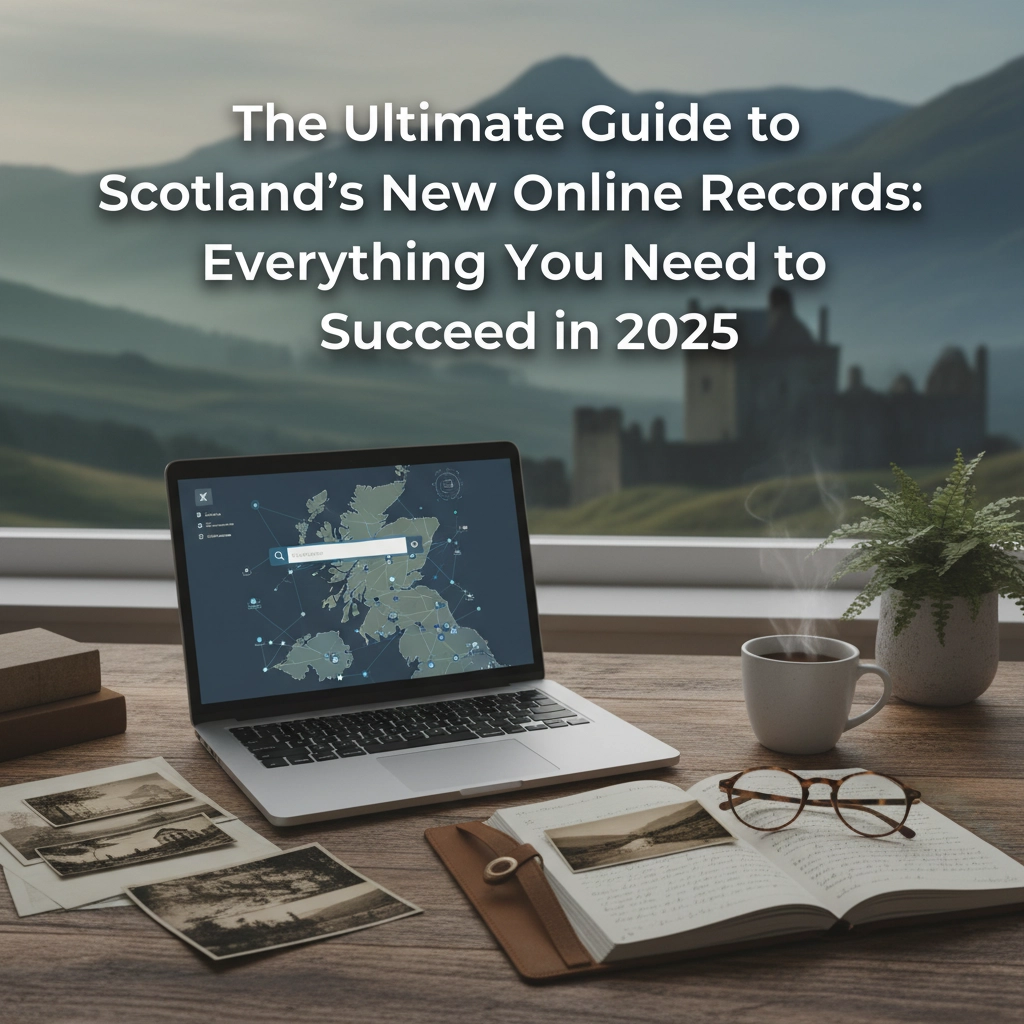
Scotland's rich genealogical landscape has undergone a remarkable transformation in 2025, offering family historians unprecedented access to centuries of records with just a few clicks. Whether you're tracing Highland ancestors, Lowland farmers, or Scottish emigrants who made their way to Atlantic Canada, this year's expanded digital collections provide your secret weapon for breaking through those stubborn brick walls.

The days of travelling to Edinburgh or Glasgow to access crucial records are largely behind us. Today's Scottish genealogy researcher has a treasure trove of resources at their fingertips, from newly digitised parish registers to groundbreaking databases that weren't even imaginable a decade ago.

The Crown Jewel: ScotlandsPeople Gets Even Better

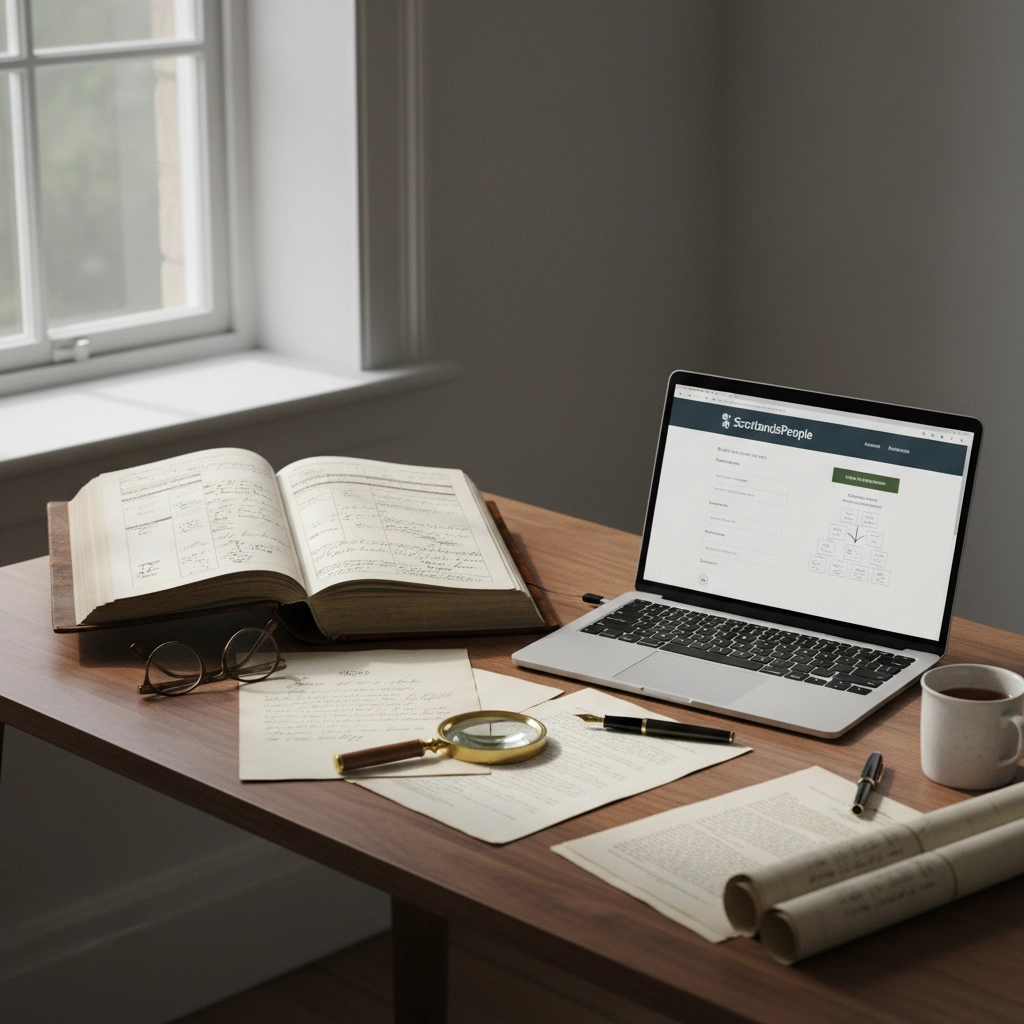
ScotlandsPeople remains the undisputed champion of Scottish genealogy platforms, and 2025 has brought significant enhancements that make it absolutely essential for serious researchers. Run by the National Records of Scotland, this isn't just another genealogy website: it's the official custodian of Scotland's historical records, making it your most reliable starting point.

What sets ScotlandsPeople apart is its unique blend of free searching with reasonably priced document access. You can search their extensive collections without spending a penny, then purchase high-quality scans of original documents only when you've found exactly what you need. It's like having a research assistant who lets you browse before you buy.

The platform's collections span civil registration records, parish registers, wills and testaments, valuation records, and much more. For genealogists working with Atlantic Canadian families, these records often provide the crucial Scottish origins that complete the immigration story.

image_1

FamilySearch: Your Free Scottish Research Powerhouse

Don't underestimate the power of free resources, particularly FamilySearch's Scottish collections. Their Scotland Births and Baptisms 1564-1950 and Scotland Marriages 1561-1910 indexes provide extraordinary value for researchers operating on any budget.

These collections primarily contain Church of Scotland records prior to 1855 and statutory records from 1856-1874/75. The beauty of FamilySearch lies in its accessibility: you can access these records from home or visit any FamilySearch centre for additional resources. For How We Got Here Genealogy Services clients, I often recommend starting here to establish basic family connections before investing in more specialised platforms.

The search functionality is robust, allowing you to cast wide nets for variant spellings of Scottish surnames or narrow your focus to specific parishes and time periods. Always cross-check your FamilySearch findings with other sources, but don't be surprised when these free records unlock significant breakthroughs.

Findmypast: The Scottish Specialist You Need to Know

Findmypast has positioned itself as the go-to platform for comprehensive Scottish research, and their 2025 collections represent the most extensive Scottish genealogy database available anywhere online. Their Scottish parish records collection spans four centuries and covers every parish in the country: a feat that would have been impossible just a few years ago.

What makes Findmypast particularly valuable is their partnerships with hundreds of family history societies, archives, and volunteers across Scotland. This collaborative approach has resulted in collections you simply won't find elsewhere, including:

  • Scottish Catholic Heritage Archive: Groundbreaking digitised parish registers covering all of Scotland's Catholic communities
  • Scotland Monumental Inscriptions: The largest online collection of cemetery and gravestone records
  • Civil and Modern Records: Comprehensive birth, marriage, death, and burial records from 1855 to 2021
  • Poor Law and Poor Lists: Often overlooked records that document ancestors who faced hardship

The Poor Law records deserve special attention from Atlantic Canadian researchers. These documents frequently capture individuals who might not appear in traditional church or civil records, often providing crucial details about families preparing for emigration.

image_2

Hidden Gems: Scottish Indexes and Community Resources

While the major platforms grab headlines, some of the most valuable Scottish research happens through specialised community resources. Scottish Indexes offers detailed free indexes of National Records of Scotland materials that would otherwise be difficult to access, including paternity cases and asylum records.

These indexes serve as excellent reconnaissance tools. You can search freely to identify promising records, then purchase scans of original documents when you've confirmed a match. It's a cost-effective approach that professional genealogists have used for years.

The National Library of Scotland's Internet Archive platform deserves recognition as a hidden gem. Their freely available collections include published family histories, military lists for the British Army, RAF, and Royal Navy, rolls of honour, gazetteers, and over a thousand Post Office directories. For researchers tracing Scottish military service or seeking geographical context, this resource is invaluable.

Navigating Regional and Local Resources

Scotland's diverse regions each offer unique research challenges and opportunities. Local archive platforms like the Friends of Dundee City Archives provide transcribed church records, burial records, burgh registers, trade directories, school records, and Poor Law registers specific to particular areas.

Don't overlook platforms like Electric Scotland and Virtual Mitchell, which offer community-driven access to Scottish genealogy materials. While these resources require more careful verification than official archives, they often contain transcriptions and materials unavailable elsewhere.

The key to success with regional resources is understanding which specific locations and dates are covered by each collection. Before diving deep into research, verify the geographical and temporal scope of your chosen databases.

image_3

Strategies for Success in 2025

Modern Scottish genealogy research requires a multi-platform approach. Start with free resources like FamilySearch to establish basic family connections, then use ScotlandsPeople for official documentation, and supplement with Findmypast's specialised collections for comprehensive coverage.

Keep a meticulous research log noting which platforms you've searched, what terms you've used, and what results you've found. Scottish record-keeping varied significantly between regions and time periods, so systematic searching prevents overlooking crucial information.

Be open to exploring different record types. Scottish genealogy offers far more than birth, marriage, and death records. Kirk session records, heritors' records, school registers, and trade guild memberships can provide rich detail about ancestors' daily lives.

Use translation tools when necessary. Older Scottish records, particularly from the Highlands and Islands, may contain Gaelic terms or archaic Scottish terminology that modern researchers find challenging.

Making Sense of Scottish Record Keeping

Understanding Scottish record-keeping practices enhances your research effectiveness dramatically. Scotland's civil registration began in 1855, making it one of the first countries to implement comprehensive vital statistics recording. However, this late start means parish records remain crucial for earlier research.

Scottish parish records vary significantly in quality and completeness. Lowland parishes generally maintained better records than Highland communities, where oral tradition remained strong well into the 19th century. Border regions experienced particular challenges due to frequent conflicts and political upheaval.

The relationship between church and state in Scotland created unique record-keeping patterns. Established Church of Scotland parishes maintained official records, while dissenting congregations, Catholics, and other denominations created parallel documentation systems. Modern digital collections increasingly capture these diverse religious traditions.

Building Your Scottish Research Foundation

Success with Scotland's new online records begins with solid preparation. Gather everything you already know about your Scottish connections, including family stories, immigration records, and DNA matches. These details guide your digital searches and help verify potential matches.

Develop familiarity with Scottish naming patterns, geography, and historical context. Scottish families traditionally used patronymic naming systems, where children received names from grandparents in specific patterns. Understanding these conventions helps identify family relationships even when explicit genealogical records are missing.

Consider the historical forces that shaped your ancestors' lives. Highland Clearances, religious persecution, economic opportunities, and family networks all influenced Scottish emigration patterns. This context helps explain why your ancestors left Scotland and where they might appear in records.

The Future of Scottish Genealogy Research

The digitisation of Scottish records continues accelerating, with new collections appearing regularly throughout 2025. Stay connected with genealogy communities and professional organisations to learn about newly available resources as they become accessible.

Artificial intelligence and machine learning increasingly enhance record transcription and indexing accuracy. While human verification remains essential, these technological advances make Scottish records more searchable and accessible than ever before.

Collaborative genealogy continues expanding, with DNA testing and online family trees creating new opportunities for connecting with distant cousins and sharing research. Scottish genealogy has always been a community endeavour, and modern technology amplifies these traditional collaborative approaches.

The landscape of Scottish genealogy research has never been more promising. With comprehensive digital collections, powerful search tools, and active research communities, 2025 represents an unprecedented opportunity for discovering your Scottish heritage. Whether you're just beginning your journey or seeking to break through long-standing brick walls, Scotland's new online records provide the resources you need to succeed.

Remember, uncovering your Scottish family history is a journey, not a sprint. Every record and every story brings you closer to understanding the remarkable people who shaped your heritage. These digital tools simply make that journey more accessible, efficient, and rewarding than ever before.

By Brian Nash, Chief Genealogist and Owner, How We Got Here Genealogy Services

Scottish Family History Research
The Ultimate Guide to Scotland's New Online Records: Everything You Need to Succeed in 2025

Scotland's rich genealogical landscape has undergone a remarkable transformation in 2025, offering family historians unprecedented access to centuries of records with just a few clicks. Whether you're tracing Highland ancestors, Lowland farmers, or Scottish emigrants who made their way to Atlantic Canada, this year's expanded digital collections provide your secret weapon for breaking through those stubborn brick walls.

The days of travelling to Edinburgh or Glasgow to access crucial records are largely behind us. Today's Scottish genealogy researcher has a treasure trove of resources at their fingertips, from newly digitised parish registers to groundbreaking databases that weren't even imaginable a decade ago.

The Crown Jewel: ScotlandsPeople Gets Even Better

ScotlandsPeople remains the undisputed champion of Scottish genealogy platforms, and 2025 has brought significant enhancements that make it absolutely essential for serious researchers. Run by the National Records of Scotland, this isn't just another genealogy website: it's the official custodian of Scotland's historical records, making it your most reliable starting point.

What sets ScotlandsPeople apart is its unique blend of free searching with reasonably priced document access. You can search their extensive collections without spending a penny, then purchase high-quality scans of original documents only when you've found exactly what you need. It's like having a research assistant who lets you browse before you buy.

The platform's collections span civil registration records, parish registers, wills and testaments, valuation records, and much more. For genealogists working with Atlantic Canadian families, these records often provide the crucial Scottish origins that complete the immigration story.

image_1

FamilySearch: Your Free Scottish Research Powerhouse

Don't underestimate the power of free resources, particularly FamilySearch's Scottish collections. Their Scotland Births and Baptisms 1564-1950 and Scotland Marriages 1561-1910 indexes provide extraordinary value for researchers operating on any budget.

These collections primarily contain Church of Scotland records prior to 1855 and statutory records from 1856-1874/75. The beauty of FamilySearch lies in its accessibility: you can access these records from home or visit any FamilySearch centre for additional resources. For How We Got Here Genealogy Services clients, I often recommend starting here to establish basic family connections before investing in more specialised platforms.

The search functionality is robust, allowing you to cast wide nets for variant spellings of Scottish surnames or narrow your focus to specific parishes and time periods. Always cross-check your FamilySearch findings with other sources, but don't be surprised when these free records unlock significant breakthroughs.

Findmypast: The Scottish Specialist You Need to Know

Findmypast has positioned itself as the go-to platform for comprehensive Scottish research, and their 2025 collections represent the most extensive Scottish genealogy database available anywhere online. Their Scottish parish records collection spans four centuries and covers every parish in the country: a feat that would have been impossible just a few years ago.

What makes Findmypast particularly valuable is their partnerships with hundreds of family history societies, archives, and volunteers across Scotland. This collaborative approach has resulted in collections you simply won't find elsewhere, including:

  • Scottish Catholic Heritage Archive: Groundbreaking digitised parish registers covering all of Scotland's Catholic communities
  • Scotland Monumental Inscriptions: The largest online collection of cemetery and gravestone records
  • Civil and Modern Records: Comprehensive birth, marriage, death, and burial records from 1855 to 2021
  • Poor Law and Poor Lists: Often overlooked records that document ancestors who faced hardship

The Poor Law records deserve special attention from Atlantic Canadian researchers. These documents frequently capture individuals who might not appear in traditional church or civil records, often providing crucial details about families preparing for emigration.

image_2

Hidden Gems: Scottish Indexes and Community Resources

While the major platforms grab headlines, some of the most valuable Scottish research happens through specialised community resources. Scottish Indexes offers detailed free indexes of National Records of Scotland materials that would otherwise be difficult to access, including paternity cases and asylum records.

These indexes serve as excellent reconnaissance tools. You can search freely to identify promising records, then purchase scans of original documents when you've confirmed a match. It's a cost-effective approach that professional genealogists have used for years.

The National Library of Scotland's Internet Archive platform deserves recognition as a hidden gem. Their freely available collections include published family histories, military lists for the British Army, RAF, and Royal Navy, rolls of honour, gazetteers, and over a thousand Post Office directories. For researchers tracing Scottish military service or seeking geographical context, this resource is invaluable.

Navigating Regional and Local Resources

Scotland's diverse regions each offer unique research challenges and opportunities. Local archive platforms like the Friends of Dundee City Archives provide transcribed church records, burial records, burgh registers, trade directories, school records, and Poor Law registers specific to particular areas.

Don't overlook platforms like Electric Scotland and Virtual Mitchell, which offer community-driven access to Scottish genealogy materials. While these resources require more careful verification than official archives, they often contain transcriptions and materials unavailable elsewhere.

The key to success with regional resources is understanding which specific locations and dates are covered by each collection. Before diving deep into research, verify the geographical and temporal scope of your chosen databases.

image_3

Strategies for Success in 2025

Modern Scottish genealogy research requires a multi-platform approach. Start with free resources like FamilySearch to establish basic family connections, then use ScotlandsPeople for official documentation, and supplement with Findmypast's specialised collections for comprehensive coverage.

Keep a meticulous research log noting which platforms you've searched, what terms you've used, and what results you've found. Scottish record-keeping varied significantly between regions and time periods, so systematic searching prevents overlooking crucial information.

Be open to exploring different record types. Scottish genealogy offers far more than birth, marriage, and death records. Kirk session records, heritors' records, school registers, and trade guild memberships can provide rich detail about ancestors' daily lives.

Use translation tools when necessary. Older Scottish records, particularly from the Highlands and Islands, may contain Gaelic terms or archaic Scottish terminology that modern researchers find challenging.

Making Sense of Scottish Record Keeping

Understanding Scottish record-keeping practices enhances your research effectiveness dramatically. Scotland's civil registration began in 1855, making it one of the first countries to implement comprehensive vital statistics recording. However, this late start means parish records remain crucial for earlier research.

Scottish parish records vary significantly in quality and completeness. Lowland parishes generally maintained better records than Highland communities, where oral tradition remained strong well into the 19th century. Border regions experienced particular challenges due to frequent conflicts and political upheaval.

The relationship between church and state in Scotland created unique record-keeping patterns. Established Church of Scotland parishes maintained official records, while dissenting congregations, Catholics, and other denominations created parallel documentation systems. Modern digital collections increasingly capture these diverse religious traditions.

Building Your Scottish Research Foundation

Success with Scotland's new online records begins with solid preparation. Gather everything you already know about your Scottish connections, including family stories, immigration records, and DNA matches. These details guide your digital searches and help verify potential matches.

Develop familiarity with Scottish naming patterns, geography, and historical context. Scottish families traditionally used patronymic naming systems, where children received names from grandparents in specific patterns. Understanding these conventions helps identify family relationships even when explicit genealogical records are missing.

Consider the historical forces that shaped your ancestors' lives. Highland Clearances, religious persecution, economic opportunities, and family networks all influenced Scottish emigration patterns. This context helps explain why your ancestors left Scotland and where they might appear in records.

The Future of Scottish Genealogy Research

The digitisation of Scottish records continues accelerating, with new collections appearing regularly throughout 2025. Stay connected with genealogy communities and professional organisations to learn about newly available resources as they become accessible.

Artificial intelligence and machine learning increasingly enhance record transcription and indexing accuracy. While human verification remains essential, these technological advances make Scottish records more searchable and accessible than ever before.

Collaborative genealogy continues expanding, with DNA testing and online family trees creating new opportunities for connecting with distant cousins and sharing research. Scottish genealogy has always been a community endeavour, and modern technology amplifies these traditional collaborative approaches.

The landscape of Scottish genealogy research has never been more promising. With comprehensive digital collections, powerful search tools, and active research communities, 2025 represents an unprecedented opportunity for discovering your Scottish heritage. Whether you're just beginning your journey or seeking to break through long-standing brick walls, Scotland's new online records provide the resources you need to succeed.

Remember, uncovering your Scottish family history is a journey, not a sprint. Every record and every story brings you closer to understanding the remarkable people who shaped your heritage. These digital tools simply make that journey more accessible, efficient, and rewarding than ever before.

By Brian Nash, Chief Genealogist and Owner, How We Got Here Genealogy Services

Stop Digging Through Dusty Archives: 10 Digital Tools That Will Transform Your Family History Research in 2025

Gone are the days when family historians had to spend countless hours hunched over dusty ledgers in dimly lit archives, squinting at faded handwriting through magnifying glasses. The digital revolution has transformed genealogy research from a laborious treasure hunt into an exciting adventure you can embark upon from the comfort of your own home. Whether you're just starting your family history journey or you're a seasoned researcher hitting brick walls, these 10 cutting-edge digital tools will revolutionise how you uncover your ancestors' stories in 2025.

The beauty of modern genealogy lies not just in convenience, but in the sheer volume of information now at your fingertips. We're talking about billions, yes, billions: of historical records, DNA connections spanning continents, and artificial intelligence that can decipher documents that would have stumped researchers just a decade ago. Let's dive into the tools that are reshaping family history research forever.

The DNA Revolution: Testing Platforms That Connect You to Your Past

1. AncestryDNA: Your Gateway to 27 Billion Records

AncestryDNA stands as the giant in the genealogy world, and for good reason. With over 27 billion historical records and a DNA database containing more than 16 million samples, it's like having the world's largest family reunion at your disposal. The platform's smart matching technology doesn't just show you potential relatives: it connects you to historical records that might otherwise remain hidden in the vast digital archives.

What sets AncestryDNA apart is its intuitive hint system. Imagine having a research assistant who never sleeps, constantly scanning through records to find connections to your family tree. The platform will nudge you when it discovers a birth certificate that matches your great-grandmother's details or a passenger manifest that shows your ancestors' journey to North America. You can start building your family tree for free with a 14-day trial, making it an accessible entry point for curious beginners.

image_1

2. MyHeritage: Bringing Your Ancestors to Life

While many platforms focus solely on names and dates, MyHeritage understands that family history is about preserving memories and stories. With 19.4 billion historical records, it rivals the major players, but its true magic lies in multimedia preservation. You can create rich family narratives by adding photo albums, music, and videos to your family tree.

The platform's "Deep Nostalgia" feature represents a fascinating glimpse into the future of genealogy. Using artificial intelligence, it can animate faces in old photographs, creating short videos that make your Victorian-era ancestors appear to move and look around. Whilst it might seem like novelty, this technology helps create emotional connections to people who lived decades or centuries before you were born.

3. FamilyTreeDNA: The Specialist's Choice

For those seeking detailed genetic genealogy, FamilyTreeDNA offers comprehensive testing that goes beyond basic ethnicity estimates. This platform specialises in building detailed family trees that span multiple generations, with tools specifically designed for serious genealogists who want to understand complex family relationships.

The real power of FamilyTreeDNA lies in its advanced DNA analysis tools. You can track both maternal and paternal lines with precision, making it invaluable for adoptees searching for biological families or researchers trying to break through particularly stubborn brick walls. The platform's focus on genetic genealogy makes it an essential tool for anyone serious about using DNA evidence in their research.

International Specialists: Platforms for Specific Regions

4. Findmypast: Your British and Irish Connection

If your ancestors hail from the British Isles, Findmypast is your secret weapon. This platform has invested heavily in digitising British and Irish records, from parish registers to military service documents. It's particularly strong for English, Scottish, Welsh, and Irish research, with collections that often aren't available elsewhere.

The platform's ancestry kit provides detailed ethnicity percentages and allows you to trace both maternal and paternal lines across the globe. What makes Findmypast special is its focus on context: records come with historical background that helps you understand what life was like for your ancestors during their time period.

5. LivingDNA: Comprehensive Genomic Analysis

LivingDNA takes a different approach by testing your entire genome for the most complete and accurate results available. Rather than focusing on just selected portions of your DNA, this comprehensive analysis provides incredibly detailed information about your ethnic ancestry.

Results typically arrive within 10-12 weeks, but the wait is worthwhile. LivingDNA's reports include sub-regional breakdowns that can pinpoint your ancestry to specific counties within countries. For those with complex mixed heritage, this level of detail can be revelatory, showing migration patterns and ancestral movements with remarkable precision.

The Free Powerhouse: FamilySearch

6. FamilySearch: The World's Largest Free Genealogy Resource

FamilySearch deserves special recognition as the most comprehensive free genealogy platform available. Operated by The Church of Jesus Christ of Latter-day Saints, it provides access to massive collections of records from around the world without requiring a subscription. This makes it invaluable for researchers on limited budgets or those just beginning their genealogy journey.

image_2

What makes FamilySearch truly revolutionary is its collaborative approach. Multiple researchers can work together on shared family trees, combining their knowledge and sources to create more accurate and complete family histories. The platform has also implemented AI-based transcription tools that make previously unsearchable handwritten documents accessible through full-text search capabilities.

The volunteer indexing program means new records are constantly being added and made searchable. When you can't decipher that 18th-century parish register, chances are someone has already transcribed it and made it searchable on FamilySearch.

Desktop Power: Software Solutions

7. RootsMagic: Professional-Grade Family Tree Software

For researchers who prefer maintaining control over their data rather than relying on cloud-based platforms, RootsMagic offers a powerful desktop solution. Unlike subscription-based services, this software requires only a one-time purchase, making it economical for long-term users.

RootsMagic works on both Windows and Mac systems, providing robust organisational features for managing complex genealogy databases. You can create detailed reports, manage media files, and maintain meticulous source citations: all crucial elements for serious family historians. The software's strength lies in its flexibility and the fact that your data remains under your complete control.

Organisation and Management: Research Tools

8. Zotero: Your Personal Research Assistant

One of the biggest challenges in genealogy research isn't finding information: it's keeping track of what you've found. Zotero solves this problem by functioning as a comprehensive reference management system specifically valuable for genealogical research.

This free, open-source tool helps you collect, organise, annotate, cite, and share your family history research. Whether you're cataloguing website sources, managing individual record citations, or keeping track of research strategies, Zotero keeps everything systematically organised. Many professional genealogists consider it indispensable for maintaining research integrity and avoiding the frustration of relocating valuable sources.

image_3

The AI Revolution: Artificial Intelligence Tools

9. ChatGPT and AI Research Assistants

The integration of artificial intelligence into genealogy research represents perhaps the most exciting development in recent years. ChatGPT and similar AI tools like Claude and Google Gemini have become invaluable research assistants, offering capabilities that seemed impossible just a few years ago.

ChatGPT excels at creating organised, step-by-step research plans with actionable directions. You can ask it to suggest specific census years to investigate, recommend National Archives record groups, or help interpret complex historical documents. Google Gemini is particularly effective at identifying key genealogical sources like military records and newspaper archives, often providing helpful reminders about Freedom of Information Act requests for additional data.

These AI tools don't replace traditional research methods: they enhance them. They can help translate foreign language documents, suggest alternative spellings for ancestor names, and provide historical context that helps you understand your ancestors' lives. Think of them as having a knowledgeable research partner available 24 hours a day.

10. Perplexity AI: The Research Query Specialist

Perplexity AI deserves special mention for its ability to handle complex genealogical queries with sourced answers. Unlike general search engines, Perplexity understands research context and can provide specific, actionable advice for genealogical challenges.

You can ask Perplexity questions like "What records are available for tracking Irish immigrants to Nova Scotia in the 1840s?" and receive detailed, sourced responses with specific repositories and record types. It's particularly valuable for understanding historical context and identifying research strategies for specific time periods and locations.

Bringing It All Together: Your Digital Research Arsenal

The true power of these tools lies not in using them individually, but in combining them strategically. Start with DNA testing on platforms like AncestryDNA or MyHeritage to identify potential relatives and ethnicity estimates. Use FamilySearch's free resources to build your basic family tree and locate initial records. Employ specialised platforms like Findmypast for region-specific research.

image_4

Organise your findings with Zotero, manage complex data relationships with RootsMagic, and leverage AI tools to overcome research challenges and develop new strategies. This comprehensive digital toolkit transforms genealogy from a time-consuming hobby into an efficient, systematic pursuit that can yield remarkable results.

The revolution in digital genealogy tools means that more family mysteries can be solved, more connections can be made, and more stories can be preserved than ever before. Whether you're researching Acadian roots in the Maritimes, tracking Scottish Highland ancestry, or unravelling complex immigration patterns, these tools provide the keys to unlocking your family's past.

Don't let another year pass wondering about your family's story. The archives are no longer dusty, distant, or difficult to access. They're right at your fingertips, waiting to reveal the remarkable journey that led to you. Your ancestors' stories are ready to be discovered: these digital tools are your map to finding them.

Ready to transform your genealogy research? Visit How We Got Here Genealogy Services to learn how professional guidance can help you make the most of these powerful digital tools and finally breakthrough those stubborn brick walls in your family tree.

Family History Research
Stop Digging Through Dusty Archives: 10 Digital Tools That Will Transform Your Family History Research in 2025

Gone are the days when family historians had to spend countless hours hunched over dusty ledgers in dimly lit archives, squinting at faded handwriting through magnifying glasses. The digital revolution has transformed genealogy research from a laborious treasure hunt into an exciting adventure you can embark upon from the comfort of your own home. Whether you're just starting your family history journey or you're a seasoned researcher hitting brick walls, these 10 cutting-edge digital tools will revolutionise how you uncover your ancestors' stories in 2025.

The beauty of modern genealogy lies not just in convenience, but in the sheer volume of information now at your fingertips. We're talking about billions, yes, billions: of historical records, DNA connections spanning continents, and artificial intelligence that can decipher documents that would have stumped researchers just a decade ago. Let's dive into the tools that are reshaping family history research forever.

The DNA Revolution: Testing Platforms That Connect You to Your Past

1. AncestryDNA: Your Gateway to 27 Billion Records

AncestryDNA stands as the giant in the genealogy world, and for good reason. With over 27 billion historical records and a DNA database containing more than 16 million samples, it's like having the world's largest family reunion at your disposal. The platform's smart matching technology doesn't just show you potential relatives: it connects you to historical records that might otherwise remain hidden in the vast digital archives.

What sets AncestryDNA apart is its intuitive hint system. Imagine having a research assistant who never sleeps, constantly scanning through records to find connections to your family tree. The platform will nudge you when it discovers a birth certificate that matches your great-grandmother's details or a passenger manifest that shows your ancestors' journey to North America. You can start building your family tree for free with a 14-day trial, making it an accessible entry point for curious beginners.

image_1

2. MyHeritage: Bringing Your Ancestors to Life

While many platforms focus solely on names and dates, MyHeritage understands that family history is about preserving memories and stories. With 19.4 billion historical records, it rivals the major players, but its true magic lies in multimedia preservation. You can create rich family narratives by adding photo albums, music, and videos to your family tree.

The platform's "Deep Nostalgia" feature represents a fascinating glimpse into the future of genealogy. Using artificial intelligence, it can animate faces in old photographs, creating short videos that make your Victorian-era ancestors appear to move and look around. Whilst it might seem like novelty, this technology helps create emotional connections to people who lived decades or centuries before you were born.

3. FamilyTreeDNA: The Specialist's Choice

For those seeking detailed genetic genealogy, FamilyTreeDNA offers comprehensive testing that goes beyond basic ethnicity estimates. This platform specialises in building detailed family trees that span multiple generations, with tools specifically designed for serious genealogists who want to understand complex family relationships.

The real power of FamilyTreeDNA lies in its advanced DNA analysis tools. You can track both maternal and paternal lines with precision, making it invaluable for adoptees searching for biological families or researchers trying to break through particularly stubborn brick walls. The platform's focus on genetic genealogy makes it an essential tool for anyone serious about using DNA evidence in their research.

International Specialists: Platforms for Specific Regions

4. Findmypast: Your British and Irish Connection

If your ancestors hail from the British Isles, Findmypast is your secret weapon. This platform has invested heavily in digitising British and Irish records, from parish registers to military service documents. It's particularly strong for English, Scottish, Welsh, and Irish research, with collections that often aren't available elsewhere.

The platform's ancestry kit provides detailed ethnicity percentages and allows you to trace both maternal and paternal lines across the globe. What makes Findmypast special is its focus on context: records come with historical background that helps you understand what life was like for your ancestors during their time period.

5. LivingDNA: Comprehensive Genomic Analysis

LivingDNA takes a different approach by testing your entire genome for the most complete and accurate results available. Rather than focusing on just selected portions of your DNA, this comprehensive analysis provides incredibly detailed information about your ethnic ancestry.

Results typically arrive within 10-12 weeks, but the wait is worthwhile. LivingDNA's reports include sub-regional breakdowns that can pinpoint your ancestry to specific counties within countries. For those with complex mixed heritage, this level of detail can be revelatory, showing migration patterns and ancestral movements with remarkable precision.

The Free Powerhouse: FamilySearch

6. FamilySearch: The World's Largest Free Genealogy Resource

FamilySearch deserves special recognition as the most comprehensive free genealogy platform available. Operated by The Church of Jesus Christ of Latter-day Saints, it provides access to massive collections of records from around the world without requiring a subscription. This makes it invaluable for researchers on limited budgets or those just beginning their genealogy journey.

image_2

What makes FamilySearch truly revolutionary is its collaborative approach. Multiple researchers can work together on shared family trees, combining their knowledge and sources to create more accurate and complete family histories. The platform has also implemented AI-based transcription tools that make previously unsearchable handwritten documents accessible through full-text search capabilities.

The volunteer indexing program means new records are constantly being added and made searchable. When you can't decipher that 18th-century parish register, chances are someone has already transcribed it and made it searchable on FamilySearch.

Desktop Power: Software Solutions

7. RootsMagic: Professional-Grade Family Tree Software

For researchers who prefer maintaining control over their data rather than relying on cloud-based platforms, RootsMagic offers a powerful desktop solution. Unlike subscription-based services, this software requires only a one-time purchase, making it economical for long-term users.

RootsMagic works on both Windows and Mac systems, providing robust organisational features for managing complex genealogy databases. You can create detailed reports, manage media files, and maintain meticulous source citations: all crucial elements for serious family historians. The software's strength lies in its flexibility and the fact that your data remains under your complete control.

Organisation and Management: Research Tools

8. Zotero: Your Personal Research Assistant

One of the biggest challenges in genealogy research isn't finding information: it's keeping track of what you've found. Zotero solves this problem by functioning as a comprehensive reference management system specifically valuable for genealogical research.

This free, open-source tool helps you collect, organise, annotate, cite, and share your family history research. Whether you're cataloguing website sources, managing individual record citations, or keeping track of research strategies, Zotero keeps everything systematically organised. Many professional genealogists consider it indispensable for maintaining research integrity and avoiding the frustration of relocating valuable sources.

image_3

The AI Revolution: Artificial Intelligence Tools

9. ChatGPT and AI Research Assistants

The integration of artificial intelligence into genealogy research represents perhaps the most exciting development in recent years. ChatGPT and similar AI tools like Claude and Google Gemini have become invaluable research assistants, offering capabilities that seemed impossible just a few years ago.

ChatGPT excels at creating organised, step-by-step research plans with actionable directions. You can ask it to suggest specific census years to investigate, recommend National Archives record groups, or help interpret complex historical documents. Google Gemini is particularly effective at identifying key genealogical sources like military records and newspaper archives, often providing helpful reminders about Freedom of Information Act requests for additional data.

These AI tools don't replace traditional research methods: they enhance them. They can help translate foreign language documents, suggest alternative spellings for ancestor names, and provide historical context that helps you understand your ancestors' lives. Think of them as having a knowledgeable research partner available 24 hours a day.

10. Perplexity AI: The Research Query Specialist

Perplexity AI deserves special mention for its ability to handle complex genealogical queries with sourced answers. Unlike general search engines, Perplexity understands research context and can provide specific, actionable advice for genealogical challenges.

You can ask Perplexity questions like "What records are available for tracking Irish immigrants to Nova Scotia in the 1840s?" and receive detailed, sourced responses with specific repositories and record types. It's particularly valuable for understanding historical context and identifying research strategies for specific time periods and locations.

Bringing It All Together: Your Digital Research Arsenal

The true power of these tools lies not in using them individually, but in combining them strategically. Start with DNA testing on platforms like AncestryDNA or MyHeritage to identify potential relatives and ethnicity estimates. Use FamilySearch's free resources to build your basic family tree and locate initial records. Employ specialised platforms like Findmypast for region-specific research.

image_4

Organise your findings with Zotero, manage complex data relationships with RootsMagic, and leverage AI tools to overcome research challenges and develop new strategies. This comprehensive digital toolkit transforms genealogy from a time-consuming hobby into an efficient, systematic pursuit that can yield remarkable results.

The revolution in digital genealogy tools means that more family mysteries can be solved, more connections can be made, and more stories can be preserved than ever before. Whether you're researching Acadian roots in the Maritimes, tracking Scottish Highland ancestry, or unravelling complex immigration patterns, these tools provide the keys to unlocking your family's past.

Don't let another year pass wondering about your family's story. The archives are no longer dusty, distant, or difficult to access. They're right at your fingertips, waiting to reveal the remarkable journey that led to you. Your ancestors' stories are ready to be discovered: these digital tools are your map to finding them.

Ready to transform your genealogy research? Visit How We Got Here Genealogy Services to learn how professional guidance can help you make the most of these powerful digital tools and finally breakthrough those stubborn brick walls in your family tree.